
Equine veterinary services
in Patterson, New York.
A 29,000-square-foot hospital and a practice that travels, staffed around the clock. Emergency care, surgery, internal medicine, oncology, diagnostic imaging, isolation, ambulatory practice, and sports medicine. The same doctors carry the case, in the same building, from the first farm call through discharge.
Our specialists are at the farm, on the case, and here when the horse needs to come in. A child's first pony and a horse mid-season get the same medicine and the same attention.
Call first
Call before you load. We advise on the spot and ready the team.
We prepare
We brief the doctor on call and ready the stall, the imaging suite, or surgery.
Arrival
We meet you at the trailer and examine the horse, with imaging and laboratory work as the case needs.
The plan
We talk you through the findings and the options before treatment continues.
The hospital never closes. If your horse needs to come in, call us and come. Anyone can use the hospital, client or not.
We run 24-hour intensive care, and not only for the performance horse. The miniature donkey, the mare, the foal. A sick horse is a sick horse.
Because the laboratory, the imaging suite, and the surgical suite sit in the same building, a critical case can move from arrival to diagnosis to surgery without leaving the property.
Most people who call us are frightened, and calling at an hour they would rather not be. Tell us what you are seeing. We will tell you what to do next, and we will be ready when you get here.
Emergency & critical care.
The hospital, for anyone. One phone call and you can bring a horse in, client or not.
Farm emergencies for our clients. Our ambulatory veterinarians travel to established clients around the clock.
Intensive care. Staffed overnight, equipped for the most critically ill horses.
Neonatology, ophthalmology, pulmonology, and orthopedics
Infectious cases accepted. A separate isolation facility on site, including USDA quarantine.
MRI, nuclear scintigraphy, ultrasonography, digital radiography, and endoscopy, with an in-house laboratory and a surgical suite in the same building. Board-certified radiologists read every advanced study, and the doctor acting on it is the doctor treating your horse.
Imaging is a step in a diagnosis, not the end of one. We localize the problem first, so the study aims at the right structure instead of searching broadly. Findings turn into treatment the same day.
Diagnostic imaging.
MRI.† Recumbent, about an hour. Standing units reach the foot and the fetlock, and movement degrades the image. We chose recumbent for a better picture, and because it reaches the upper limb, the skull, the brain, the sinuses, and the teeth.
Nuclear scintigraphy (bone scan). Standing and sedated. We image the whole horse rather than one region, which matters when a horse is sore in several places, or the lameness sits high in the limb. The unit and its software are new.
Ultrasonography. In-house and ambulatory, on the highest-end equipment made rather than the standard unit. Soft tissue, musculoskeletal, pulmonary, gastrointestinal, and echocardiography. Better resolution reaches the diagnosis more often, and sooner.
Digital radiography. In-house and ambulatory, stall-side or in hospital. We share images electronically.
Endoscopy. Standing and dynamic one-meter scopes for the upper airway at rest and at exercise. For the stomach we use a three and a half meter gastroscope, which reaches further than most practices can and makes the gastroscopy complete rather than partial.
A board-certified surgeon, a dedicated surgical suite, and a hospital that never closes. If your horse has a surgical emergency, we are ready.
We handle the full range of surgery, emergency and elective. Because imaging and laboratory work happen in the same building, the surgeon reviewing the scans is the surgeon who operates.
Owners have a lounge and a viewing area. Waiting is part of the day too, and you shouldn't have to do it in a parking lot.
Equine surgery.
Colic surgery. Emergency abdominal exploration, around the clock.
Minimally invasive laparoscopy and arthroscopy
Laser surgery. Including upper airway work that many practices refer out.
Fracture repair. With LCP plating, so the repair happens here rather than moving on.
Wound reconstruction
Cesarean section. With neonatal support on site.
Owner lounge and viewing area
We take fever cases and contagious horses. There is nothing too big and nothing too sick.
A hospital should take a sick horse. The contagious diarrheas and strangles need hospital care most and are hardest to house, so we built for them.
Each isolation stall stands alone, with its own handling. Infectious horses stay clear of the general population from the moment they arrive. We follow strict biosecurity protocols, and that is what lets us say yes.
If you are worried about the rest of your barn, say so when you call. Containment starts with how we receive the horse. We want to give your horse a chance to live. That is usually the whole of it.
Isolation & infectious disease.
Fevers of unknown origin. Admitted and worked up in isolation.
Contagious diarrhea, strangles, and EHV. Diagnosis, treatment, and containment.
USDA quarantine. An approved facility.
Separate stalls, strict biosecurity protocols. Each stall stands alone.
Equine oncology.
A tumor can go several ways, and the right answer depends on the tumor, its location, and the horse. We treat four ways, not one.
A new mass on a horse you have had for fifteen years is a hard conversation, and we will give you the honest version of it. What it is, what it will likely do, and what each option asks of the horse.
Surgical removal remains the gold standard for many tumors. Where surgery alone will not do it, because of location, margins, or recurrence, we treat with electronic brachytherapy, injectable isotopes for solid tumors, and immunotherapy.
Surgical removal. The gold standard when margins allow.
Electronic brachytherapy. Targeted radiation for surface and periocular tumors.
Injectable isotopes. For solid tumors.
Immunotherapy. With Dr. Jeremy Frederick, DACVIM.
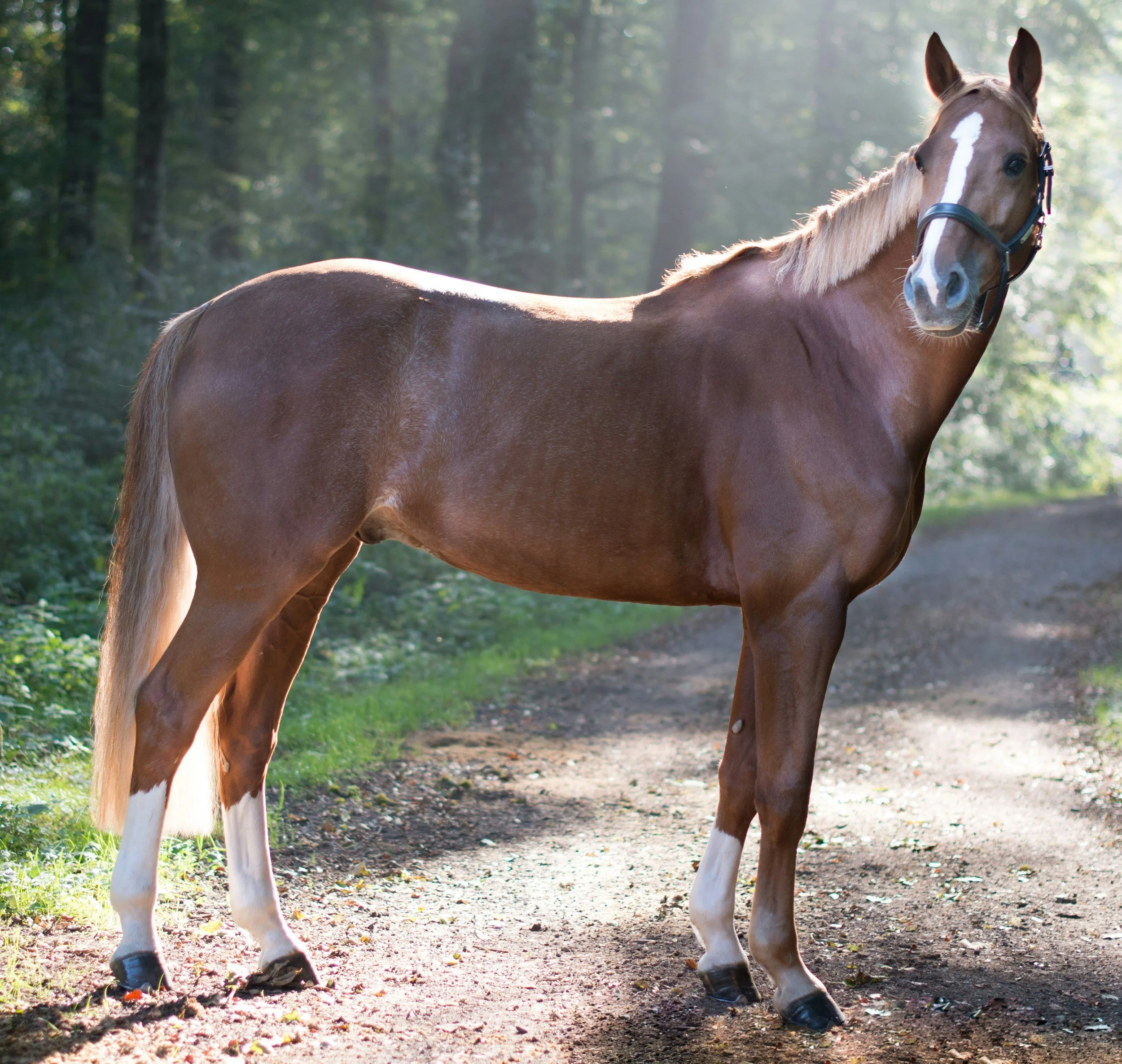
The cases that stay undiagnosed, or that come back after standard treatment. The horse losing weight, running a fever, colicking repeatedly, or not performing the way it used to. Internal medicine is where we take the deeper dive.
These are a puzzle before they are a diagnosis. In-house laboratory work and imaging let us follow the thread the same day instead of losing a week to an outside report.
Internal medicine.
Neonatology. Care for the compromised foal, with the mare alongside.
Ophthalmology. Equine eye disease, with a board-certified ophthalmologist consulted on the cases that call for one.
Pulmonology. Airway and respiratory disease, supported by dynamic endoscopy.
Gastroenterology. Gastric ulcers and recurrent or chronic abdominal pain.
In-house laboratory. Same-day results.
Ambulatory practice.
Our veterinarians come to you. Routine care, farm emergencies, and lameness work happen where the horse lives. When a case needs the hospital, the same practice carries it through.
The veterinarian who sees your horse at the barn belongs to the same practice that would operate on it. That is the part worth knowing. Nobody gets handed a case cold, and nothing gets explained twice.
Scheduled appointments go through the front desk. The on-call veterinarian is available around the clock for farm emergencies for our established clients.
Routine and preventive care. On the farm, on schedule.
Farm emergencies. On-call veterinarian, 24 hours a day, for established clients.
Lameness evaluation. With hospital imaging available when the exam calls for it.
Pre-purchase examination
Wellington, Florida. Seasonal travel, December through April.
Sports medicine
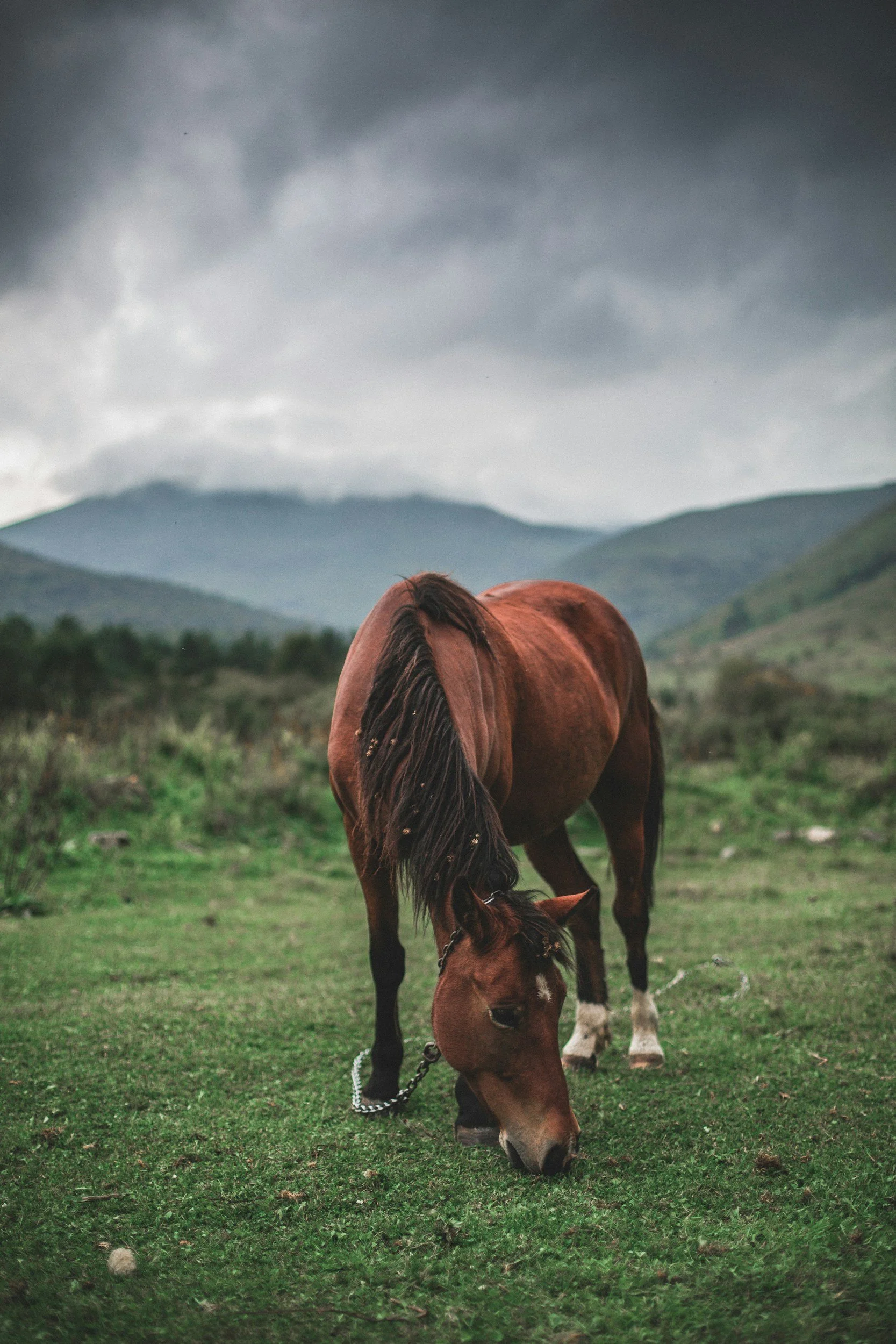
Performing at the highest level without risking longevity. Those two pull against each other, and managing the tension is the whole job.
The useful work happens early. A subtle change in the way a horse moves, caught in the spring, is a different conversation from the same problem found in September. We would rather find it while it is still small.
That means knowing the horse, not just the scan. A sport horse in work has a baseline, and the job is noticing when it shifts.
Lameness evaluation. Ridden and in hand, with hospital imaging when the exam calls for it.
Regenerative and supportive therapies
Pre-purchase examination
Imaging led by the exam. We localise first, then choose the study.
At the show and at the farm. Including Wellington, December through April.
NEEP Internship
A year in a referral hospital and an ambulatory practice at once. You'll be in the surgical suite, at the farm, and on call, working beside board-certified clinicians rather than at a distance from them. Applications and details are on the careers page.